Posts from the ‘Uncategorized’ Category

Rhapsody in B/W


20 years ago, or so, I was working
in a condo on Locust St. which was owned by a gentleman whose prize
possession was an Aeolian Duo-Art piano, and hundreds of piano rolls,
arranged on shelves that covered every wall, or nearly so.  As I
learned from him, this instrument was a “reproducing piano” which
differs from a player piano in that it had hundreds of air hoses
inside , arranged and connected in such a way that they controlled
the force with which the original pianist struck the keys, the pedals
he used, as well as the notes.  The effect was a virtual performance
by the original pianist on a full sized grand piano in your parlor.
Rolls were made by by some of the best contemporary soloists, and
occasionally by the composer himself.

In 1987, a cd was released of George
Gershwin’s piano rolls, one of them a Duo-Art full reproduction
version of  him playing “Rhapsody in Blue,” which gave me a new
perspective on a tune we’ve heard (or at least heard parts of) all
our lives.  The biggest surprise is the tempo at which he played it,
in parts probably twice as fast as you’ve heard, the great
instrumental ability he had, and the overall playful and upbeat
feeling he conveyed in it, which contrasts with most orchestral
versions I’ve heard.  It no doubt is one of the best pieces of
American music ever written, and maybe the daunting task of bringing
a fully orchestrated version to life imparts a seriousness that was
never intended. The effect of watching and hearing this is like seeing the ghost of Gershwin, 26 years old when he wrote it, having a lot of fun playing it, a rock and roller at heart.

George G. originally wrote it under the working title “American Rhapsody,” but his brother Ira convinced him to call it Rhapsody in Blue, after seeing an exhibition of Whistler paintings, with names like “Arrangement in Grey and Black,” etc.

THE MANDOLIN
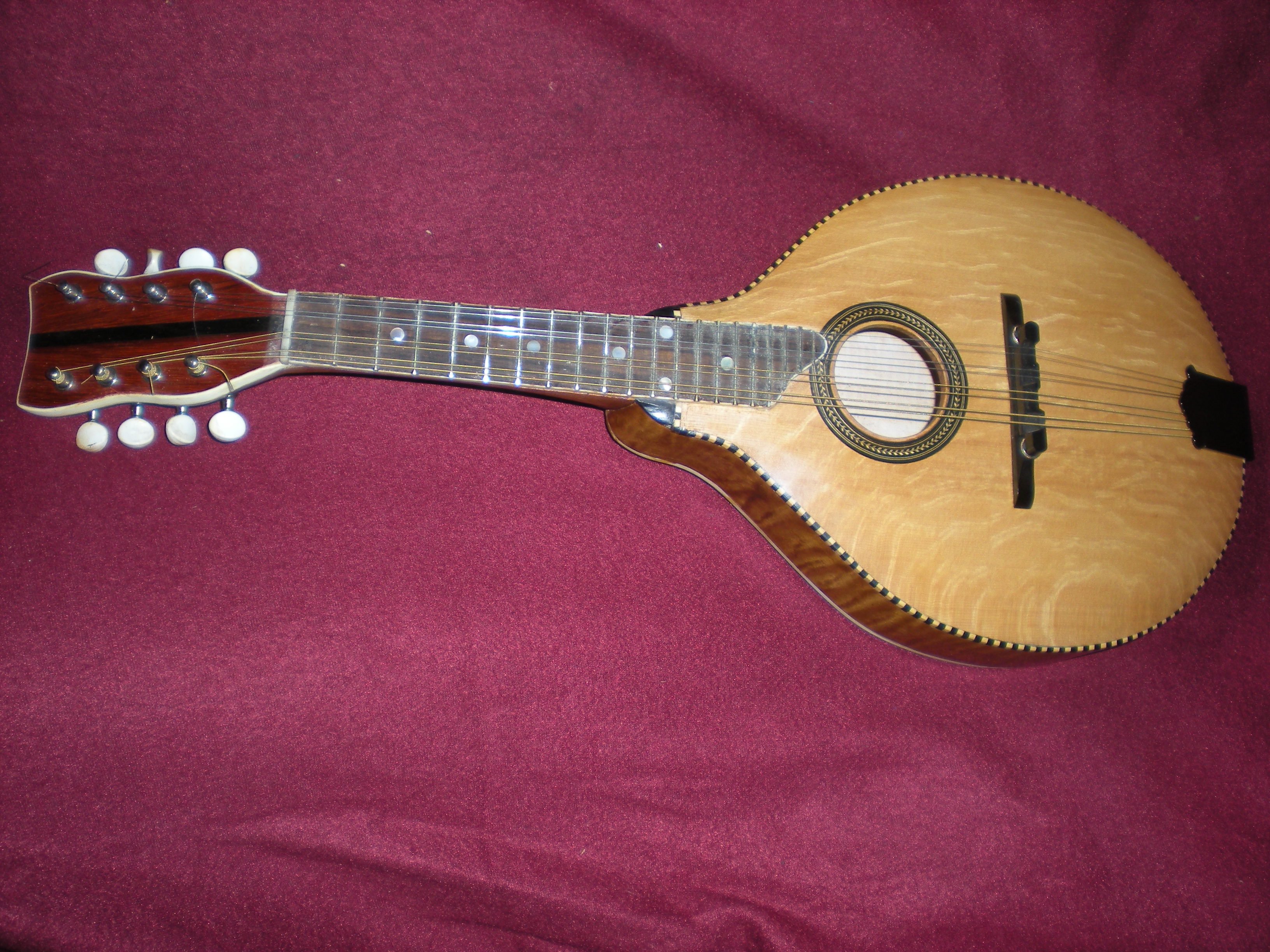
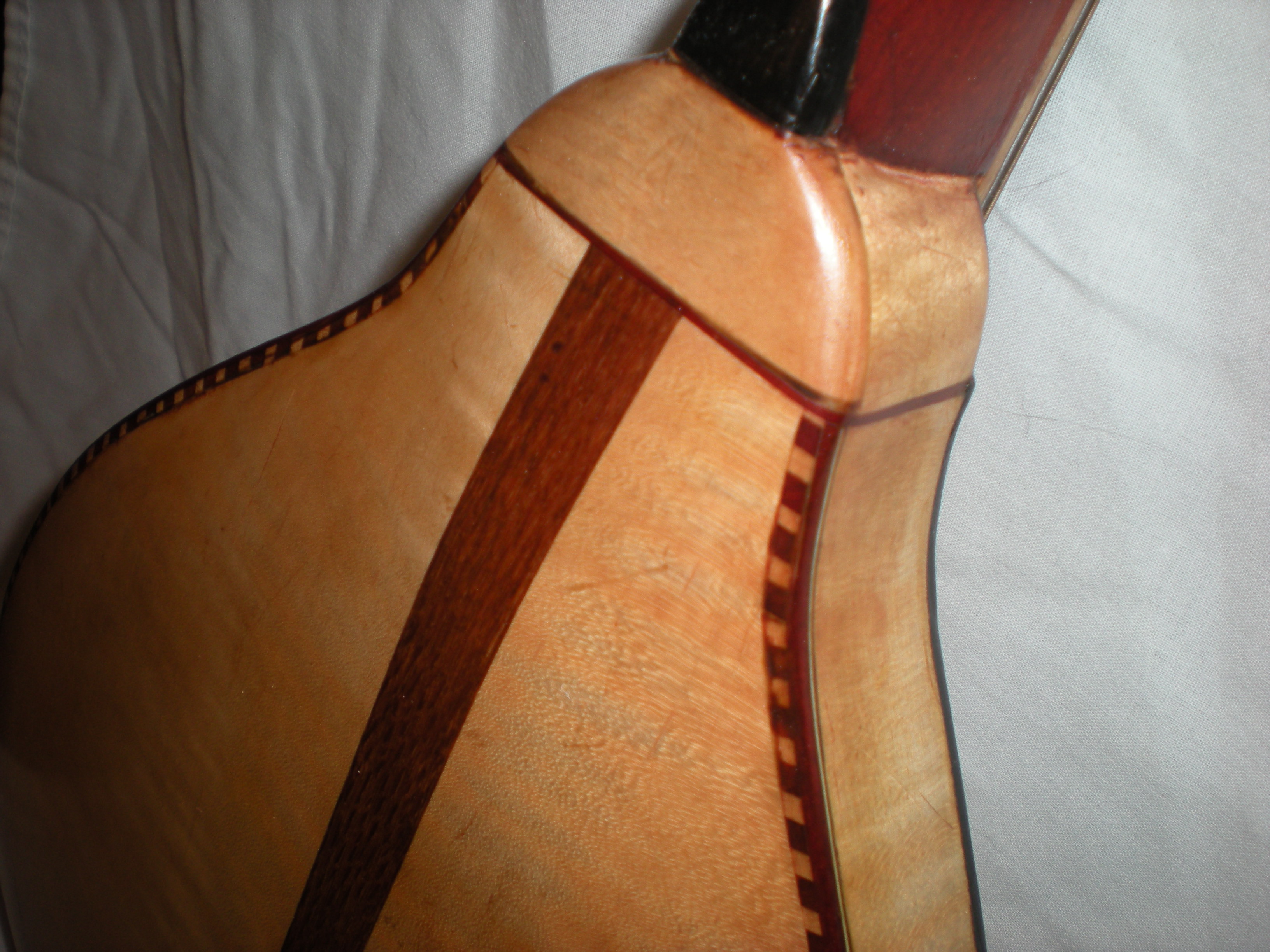
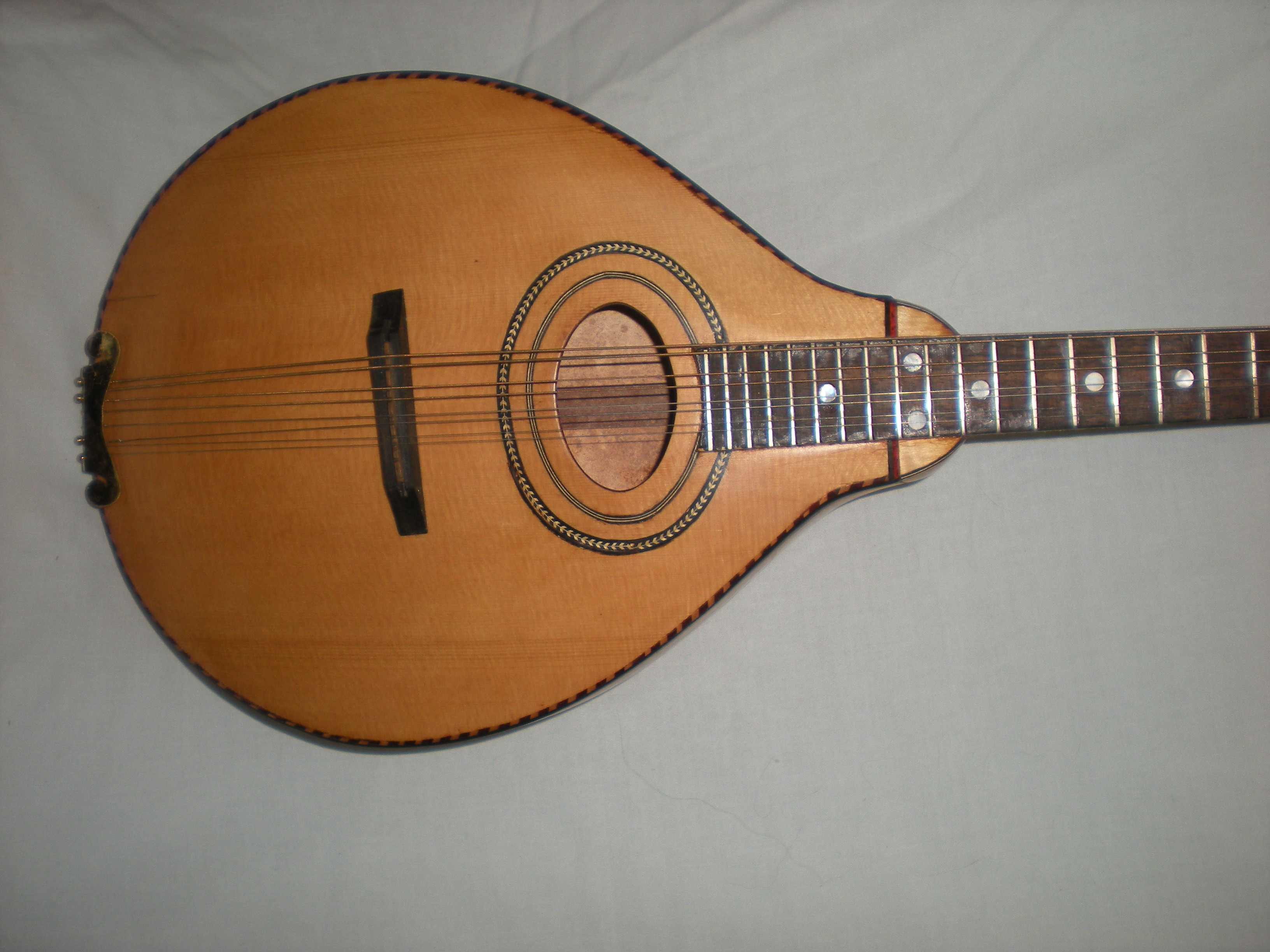
The black and white binding, made of holly and ebony, that I made for this mandolin, reminded me of piano keys, which reminded me of Gershwin, so I think a good name for this one is
“Rhapsody in B/W.”

Here are some sound samples of the “Rhapsody” mandolin recorded by my new friend, Mike Plunkett.

01 Jesu, joy of Man’s desriring

02 John Brown’s March

03 Irish
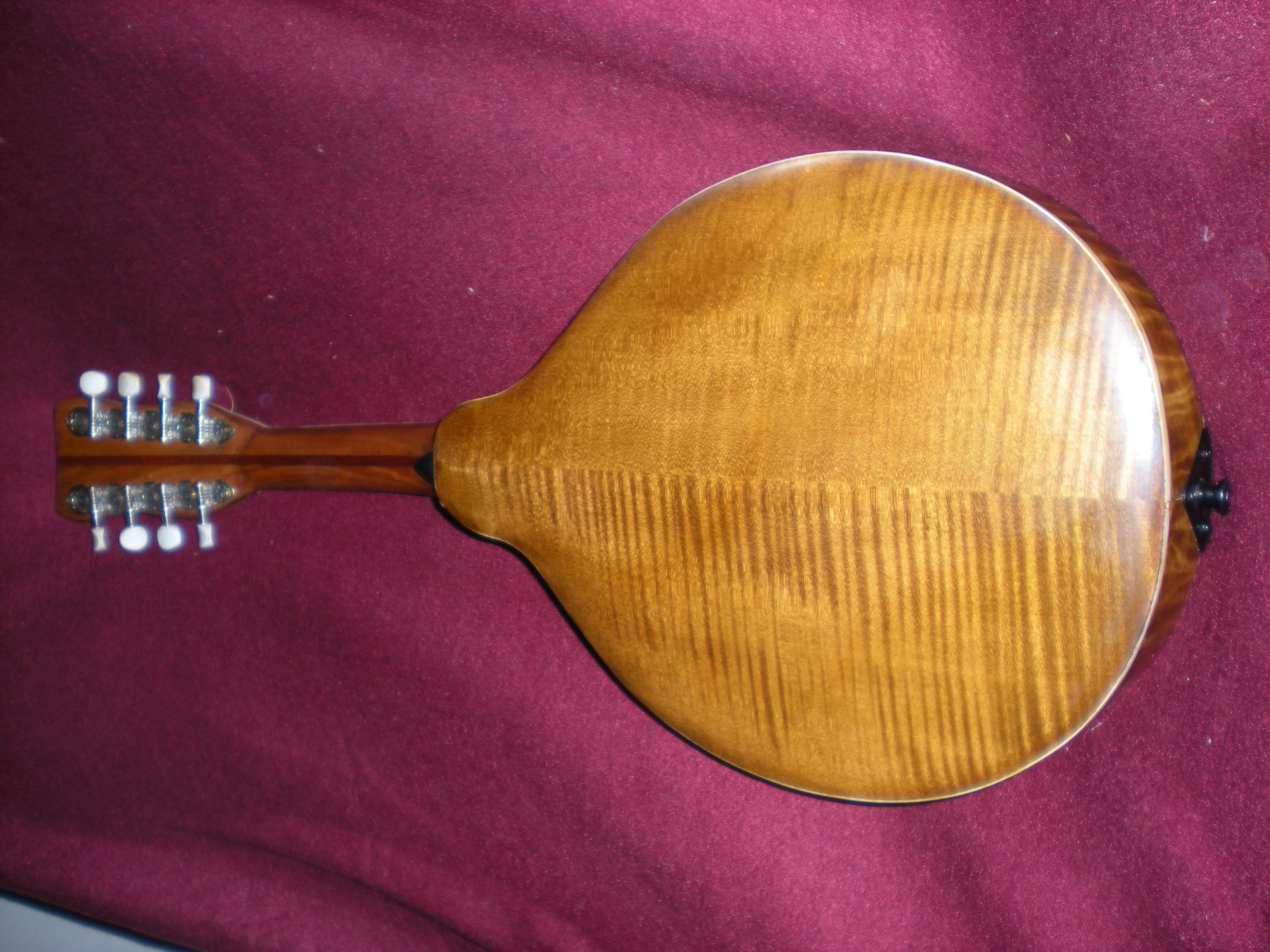
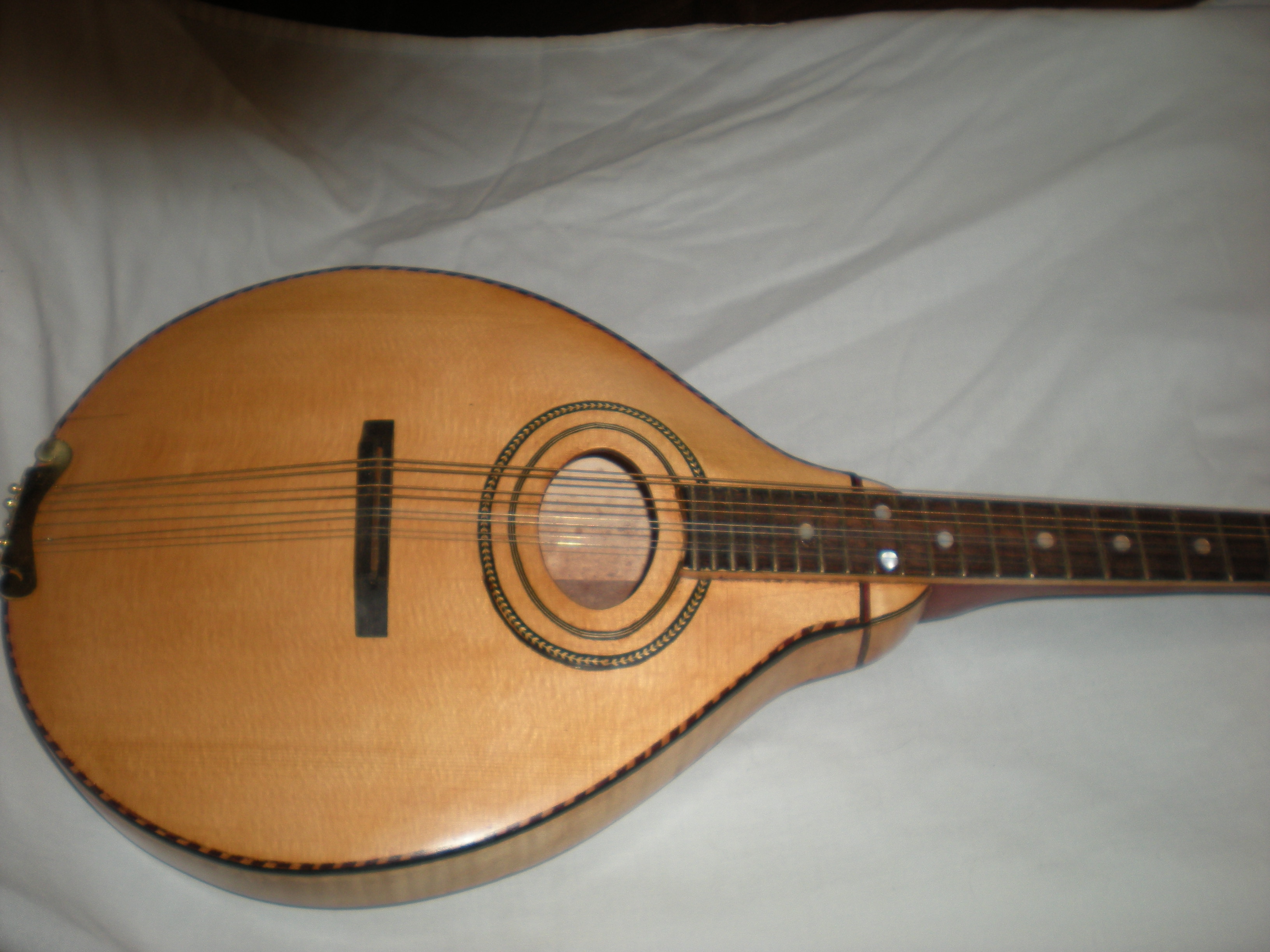
European flamed maple backs and sides, Highly figured Englemann spruce top (from Alaskawoods.com) black and white rosette, ebony and holly highlights, I even located a black tailpiece for this.
I made the sides deeper for this, by 1/2”, it has great volume as a result, a surprise effect was that the sound is bright and not as round as I would have expected.

Emma Nevada


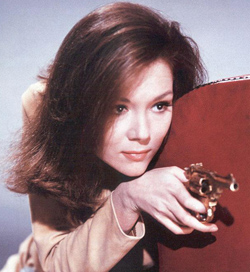
19 years ago, we were deciding on a name for the baby we were expecting soon, and in the event of a girl child, had decided on “Emma,” which was not a common name at that time, but has since become maybe the most popular name for baby girls.  With the rise of Emma Watson’s star, it  will likely hold that place for a while longer.  We thought it was pretty, there was some family history (in the geneological sense.)  “Emmie” was my favorite Laura Nyro song, (even though Emmie in the title is Emily), but we also felt that the intelligent, sophisticated, beautiful and deadly Emma Peel would be a great role model for the daughter we hadn’t yet met.

We brainstormed a bit over a middle name, even to the point of browsing baby name books, and one jumped right off the page; “Nevada,” Spanish origin, meaning “white as snow.”  It was perfect for this fair skinned, blonde baby girl, had the additional appeal of referencing my name, but what sealed it for me was the delightful way “Emma Nevada” rolls off the tongue with its own rythym, reminding me of Poe’s “Annabelle Lee.”   And so it was, Emma Nevada Jackson Fahs.


It was several years later when my sister showed up with a gift, found at a yard sale, of a framed etching of a locomotive named the Emma Nevada.


The “Emma Nevada”

Startled, I did a web search and discovered that the train was named after a famous opera singer of the late 19th century, who had risen from humble beginnings to be a world famous soprano.   Born Emma Wixom, she chose a stage name that included the state of her birth, in a mining camp, and I like to think that the musical nature of the name appealed to her as well.

Emma Nevada

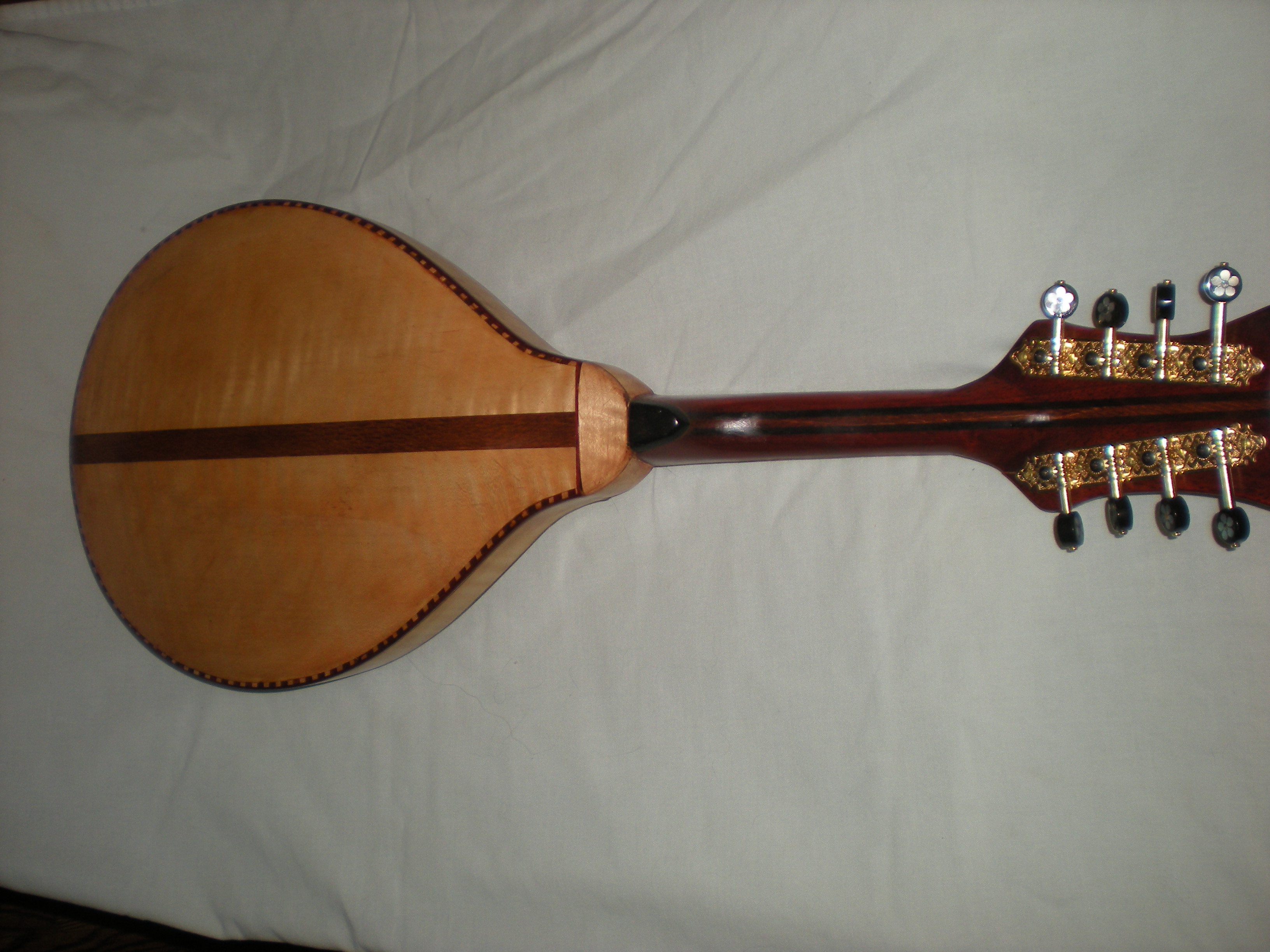
I’ve been naming my instruments as I work on them, hopefully contributing to the process of making each one unique, and having its own personality.  This one gets the name because it’s pretty and complicated, like my daughter, and has a beautiful voice like the original Emma Nevada.

Sitka spruce top, flamed European maple back and sides, with a bloodwood center strip.  bloodwood and maple shopmade  rope binding, Padauk headstock, 5 piece laminated neck of padauk, ebony and lacewood.  Note, the truss rod cover has been taken off here, showing an adjustable rod.   Hopefully, I’ll be adding some sound files in the next week, as well as a few additional instruments.

The Dad Factor


My Dad made dulcimers.  He ended up making a lot of dulcimers.  The best estimate my siblings and I can come up with is somewhere between 800 and 1000.  They kept getting nicer and nicer, too, though he only raised his price for one maybe once in 30-odd years.

The family lore is that I was responsible for his pursuit of what started as a hobby, but became a lifestyle for him. I had bought a dulcimer kit on a trip out west, and when I put the kit together, I wouldn’t let him help or participate, in spite of his experience in woodworking.  There were a couple reasons for this; first, it was an incredibly easy build.  Second was my uneasy relationship with his Shop, which was not always the same shop, but he always had one, and it was his sanctuary, one he deserved,  for respite from 4 kids and a demanding job.  My older brother Bo was more welcome there than I was, and when I would try to join the two of them, they would do an elaborate dance, subconsciously, I’m sure, that made me feel like wherever I stood was in the way.  So I’d leave.

I’ve often said that my dad taught me everything I know about how to be a man.  I’ve had to figure the rest of this shit out for myself.

There may have been paybacks in my mind when I saw him chomping at the bit to get involved in my project.  My Mom says he would sneak out to the shop after I was done working on it to assess my progress.  He was surprised and pleased when I finally finished it, but what rocked his world to the core was when I strung it up and started playing it, the dulcimer being second in difficulty of playing to the kazoo, but he didn’t realize it at the time.   It became his mission, I think, to get these instruments into the hands of all who thought they couldn’t play an instrument.

Growing up, our house had always had 10 or 12 instruments laying around, auction finds that he couldn’t resist.  Aside from the pump organs, which were playable, but for young kids were like trying to play a keyboard while working on the StairMaster, they were all variations on the zither.  Like the Guitar-Harp Zither, that resembled neither, and upon which I am willing to bet no one ever played a tune and had someone observe “Wow, that was rockin’!”  All these old zithers, and autoharps with missing pads on the chord bars, needed to be tuned with a piano wrench, which even if we kids had one, we had no reference for an actual note anywhere.

These monsters are a relic of the time just before the invention of the radio and the phonograph, when people were desperate to bring some music into the house, but not smart enough to buy something they might actually be able to play.

Try to find tabulature for this!

When my brothers and I started playing guitar, and getting better, I think my Dad started to overcompensate for the years of bringing crappy, unplayable instruments into the house to torment us with their potential, only to plunk and twang unmelodiously in return for our efforts.

So about the time he started making dulcimers in earnest,  he started buying and trading in all kinds of playable instruments, to the point where when you entered his house, it was difficult to find a place to sit or to lean an umbrella, because they were everywhere.

He kept making dulcimers up to his last days, but the collecting and trading tapered off out of necessity and waning interest, I guess.  He had one instrument of note when he died, and Bo  sent it to George Gruehn in Nashville to sell on my Mom”s behalf.  He loved the craftsmanship of this one, and I’ve only realized as I’m writing this,  I had forgotten about it until now, I swear to you.  But I think the Old Man continues to inspire me.

It was a circa 1920 A model Gibson mandolin.

Mandocello


Padauk headstock veneer, I'm considering the name "Redhead Instruments "

Before I had even finished making my first mandola, I realized I would have to make a mandocello.   Especially after hearing one playing a Bach cello suite, here.  I recently finished this one,  which is in the old K style that I prefer, and have bought the wood to make another, which I’m looking forward to.

I’m happy with the looks of it, but I’m thrilled with the sound, rich and deep and full.  I only wish I could play it like Mike Marshall, but all things in due time.  But my plan is to sell this one, and probably the next one, too, so who knows.

I didn’t have a plan or blueprint for this, so I worked from as many pictures of vintage Gibsons as I could find, and used construction details from the mandolin plans.  It has a well arched top, and like the A mandolin, this eliminates the need for exessive bracing, using only a single cross grain brace right below the soundhole.  I  modified a trapeze tailpiece intended for a guitar, adding a piece of ebony at the front as a tensioner and guide for the strings.  I reslotted the tailpiece to accept both ball end and loopend strings, and in fact, I’ve used a combination of the two on this, as I preferred the sound of bass guitar  strings for the lower C set to the loop end ones that came with the D’Addario Mandocello set.

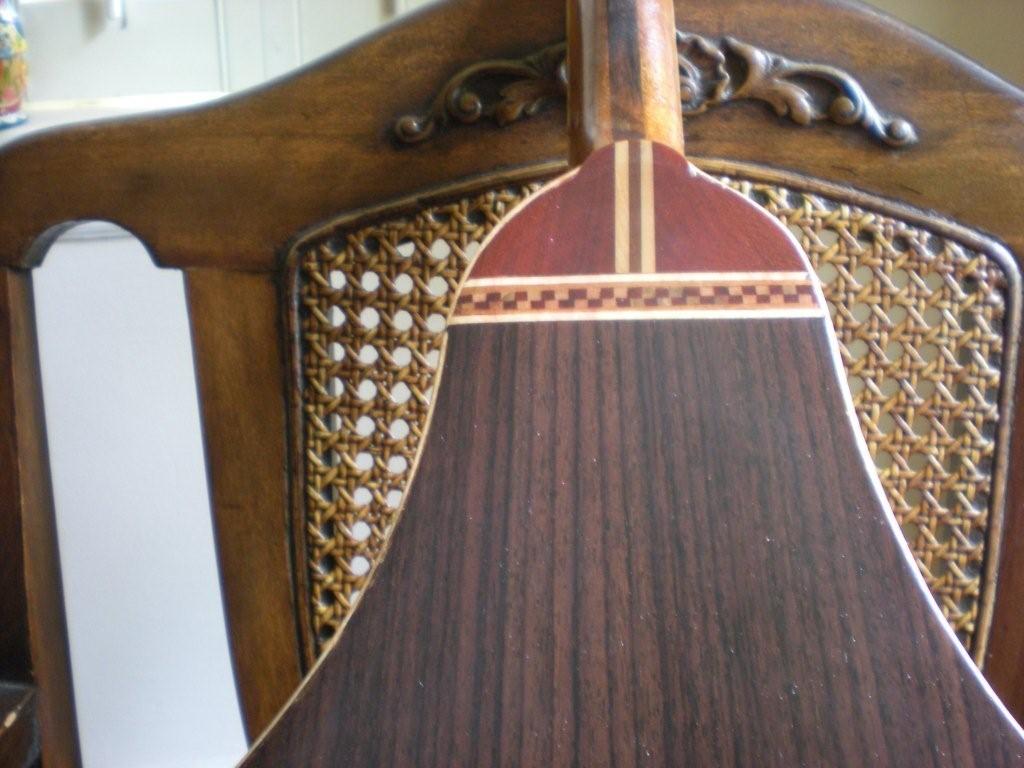
The back and sides are rosewood,  I’d like to do a carved maple back next.  I dressed the back up with a little bit of marquetry where it meets the neck, using some checkerboard trim I had made up for a banjo resonator, and that was too pretty to sit in my parts drawers.

Exotic Woods, Suburban Locale


Earlier this year, while researching sources for instrument woods, I stumbled upon a link to Exotic Hardwoods of Sicklerville, NJ, which is only about 10 miles from where I live.  I say stumbled upon, because I had been searching for “guitar woods” and “Luthier supplies,” but in desperation I finally searched for “Exotic woods,” and Bingo.  I remembered this place, I had been there a few years ago to get a fretboard and I think mahogany for a neck, but hadn’t remembered it until I saw the listing.

It’s on a typical outer  suburban road, an unassuming white house with a driveway that leads to two small warehouses in back.   The man and woman who work the yard and shop greeted me, asked what I was looking for, and then sent me in to get a sales slip from the owner so that we could start picking.

I started chatting with the owner, an older man of Indian heritage, and we ended up talking for about an hour.  He flies all over the world and hand picks each shipment of wood, so that he doesn’t end up with junk, and from the way he talks about the woods, it’s clear that this is a labor of love, as well as an enviable lifestyle for someone of a similar mind.  But in that hour, there were no other customers coming in, and when he started talking about being 72 and a little weary of it all,  I mentioned that if he increased his web presense, maybe adding some pertinent key words (as If I know how to increase web presense!)he could maybe increase business to make it more worthwhile. He smiled tolerantly, and when I was finished, he told me that 95% of his business is selling to makers like Gibson and Martin.  In fact, there was a pallet of mahogany outside, 16″X2″X 16 feet long and straight as the day is long that was being shipped out to be made into Les Pauls at the Gibson factory.

Having been totally schooled by the old guy, I headed out into the yard, where the two people I mentioned gave me their full attention for the duration.  I need a couple mahogany neck blanks, here they are, hundreds of them, pick the ones you want.  Same with the Rosewood back and side sets, all matched and numbered and in leaning stacks of 50 or so per stack, take your time, find the set you want I was told, so I did.  I needed flamed maple mandolin backs and sides, which sent them searching all over the warehouse, as it’s not something they sell a lot of.  What they came up with was violin backs and sides, which were beautiful, but at 1 7/8″ thick, twice as thick as I needed, which was not a problem, the guy just ripped it in half on his monster bandsaw, giving me two back sets for the price of one, and he threw an extra side set in to go with it.

I poked around for a while, got some other stuff, then as they were writing the slip, they asked me if I wanted any of the cutoffs that were stacked by the gang saw,  so I took 4 or 5 of the Les Paul mahogany pieces, 16X12X2, figuring I’d do something with them.  I’ve ended up making kalimbas from them, I can get 2 or 3 from each.

I think you can imagine that I didn’t want to leave, but I was out of money.  Another cordial conversation with the owner, who asked me to bring pictures next time, and I left.  Driving home, I was struck by my good fortune at living so close to a place that any instrument maker should visit, but probably won’t because there is no other reason to visit Sicklerville, NJ.  I felt like a surfer living next to Wakiki, or a skier who lives on Mt. Blanc.  But if you order from the website, I can pretty much guarantee you won’t be disappointed.  They have no junk to sell you.

I’ll be going back soon, bringing pictures.

http://www.exoticwoods.com/home.php

Roger Siminoff


I was really enjoying the Superman/Lex Luthier metaphor, but I have to mix it up here.

If Lloyd Loar was more divine
than Superman, say, a god, then Roger Siminoff would be a major
prophet/disciple.

Siminoff has written several books about building instruments
and improving acoustical properties of those instruments, and cites
Loar quite often. Although his reverence for Loar is apparent, I
give him much credit for continuing to consider other theories and
modifications for improving acoustics. He has an excellent website
with invaluble reading and resources for the aspiring mandolin maker,
and runs a camp in which attendees build their own F-5’s. On the
page is a compelling biography of Lloyd Loar.   Roger is
quick to make the point that Loar is not a luthier,  but a scientist
and industrialist and designer, and has had to defend that position publicly to Loar’s many devotees. But Loar’s workbench, pictured here, Is that of a craftsman as well, and closely mimics the chaotic nature of mine, which gives me hope.
(this pic is from Siminoff website, and the key to the letters and
arrows can be found there.

The Siminoff website front page is
here..

Roger Siminoff seems like a
terrific guy, and very knowledgeable.   I have two of his books, and refer to them often.  His “Luthier’s Handbook” will take you as deep into the acoustic properties of every feature of the instrument as you would likely care to go. If I have one beef with him it is that in his luthier camps he takes a strict machinist’s approach
to construction. He has created many fantastic jigs, templates and
fixtures that make the construction of an F-5 simple and straight
forward.

The construction of an F-5 is anything
but simple, and the construction of some of the jigs and fixtures
requires as much skill as building the instrument, at least in terms
of tolerances, etc.

So I’m curious how many of the
campers actually go home and build more instruments. For many,
that’s likely not even a goal, they just want to own and play an instrument that they can proudly claim to have built themselves.
But the process seems to me to be like touring the GM plant,
operating the assembly machinery at each station, and then being able
to go home and build a Chevy in your garage.

To be fair, Roger also hosts a
workshop in building fixtures and jigs, and if I wanted to learn
about making instruments, that’s where my money would go first.

My initial efforts at building were undisciplined and jig free. Once you decide to make more than 1 or 2, those templates and jigs are critical, especially if you want
to make your next one look like your last one. So far, I’m relying
more on templates than jigs. Most importantly, you need to determine
which features you want to duplicate exactly before you put the time
and effort into building a jig.

Quick Tip:  I’ve found the easiest way
to create a template from a full sized blueprint is to secure
colored tissue paper to the drawing and carefully trace the part you
want to template.    Carefully cut out the shape. Then I use 3M
spray adhesive to apply the tissue paper directly to a piece of 1/4”
birch ply,  This adhesive gives you time to smooth out the tissue
before it sets up.  Then I cut out on the bandsaw and smooth the
edges.  Check against the original before using.

For instance, Roger has constructed
jigs for creating his modification of the neck to body joint, the
most critical and vulnerable joint in any stringed instrument. In
the factory setting, this joint is typically a tapered dovetail as
pictured:

Many luthiers have duplicated the
joint for the reason that it is typical of factory made guitars of
the highest quality. But Roger is on the money in deciding that the
joint is flawed, and his background in instrument repair no doubt
convinced him of that. The neck portion of the dovetail is weak
because of the orientation of the grain, and in the picture above, if
you look closely, you can see that it has been modified by gluing a
strip whose grain runs perpendicular to the grain of the neck. This
is like a flying buttress to me, an architectural afterthought to
compensate for faulty design.  Roger’s modification is to keep the V shape and eliminate the dovetail, securing the joint by pinning it with dowels.

When I made that first mandolin 10
years ago for my wife, Judy, I eliminated that joint by making the
neck and the headblock out of one piece, or rather, 5 pieces
laminated to be one piece. On the mandola that I made 8 years later,
I did the same thing, and all the benefits, structural and acoustic,
of having a tight, solid joint there are only increased by doing
this. The neck can never move in relation to the body, which is
ideal. It would be impractical to build a guitar like this in an
assembly line setting, where the finished neck is attached to the
(often differently) finished body. The drawback is that there is no
way to adjust the neck if necessary down the road, but this is not
much of a problem with the short neck we’re talking about. You could
never do this with a guitar, where the neck will likely have to be
adjusted at some point in its life.

The top of the A style mandos I’m
making lately are curved, and I like to finish the carving and
planing before fitting the neck. The ideal angle of the neck to body
joint is 6 degrees, but if slightly too much wood was removed, you
can make 5 &1/2 work. So it’s become necessary to abandon the
notion of a integral neck, and find the right joint to get the most
dependable results.

After a bit of research, I found
William Cumpiano’s hardware-based neck joint, that uses
the type of hardware that comes with your Ikea furniture. His page
is
here.
It’s secure, strong and fairly easy, and unlike the pinned joint
that Siminoff uses, which is fine for parts machined to perfect
tolerances, you have a little bit of adjustment. I’ve used it a few
times, and I can really torque it down tight, unlike alternative
hardware based (bolt on, i.e.) joints.

On the mandocello I recently built, I
used a combination of Roger’s modified V joint and the knockdown
hardware. The V just gives a little more “meat” to the
tenon, which I don’t feel is needed on mandolins, but the cello has a
longer neck(guitar length) and I felt anything I could do to make it
stronger was worth it. I also added a truss rod to that neck,
non-adjustable 3/8” from
Stewart-MacDonald.

So far that neck shows no deflection,
and I expect it never will, since besides the truss rod, I did a 3
piece glue-up of mahogany-rosewood-mahogany.

I’ll be posting pics of that cello in
the next day or so.

Regards, Lex